


For many reasons, a special Traviata
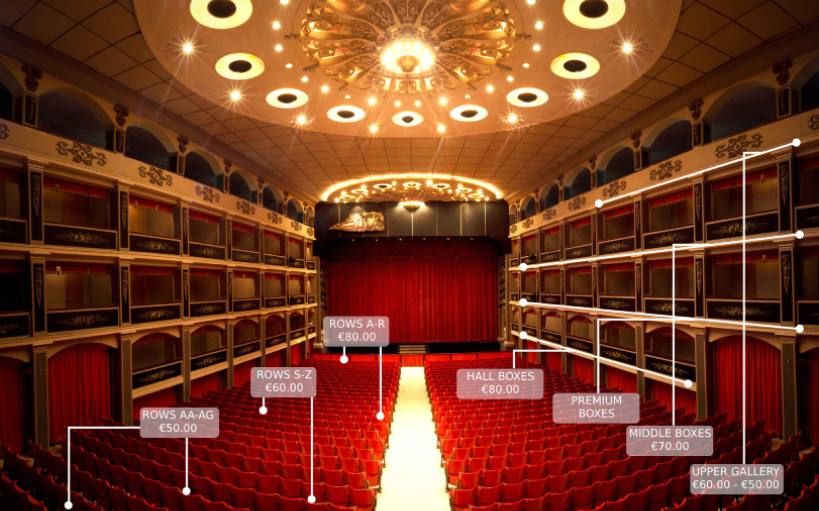
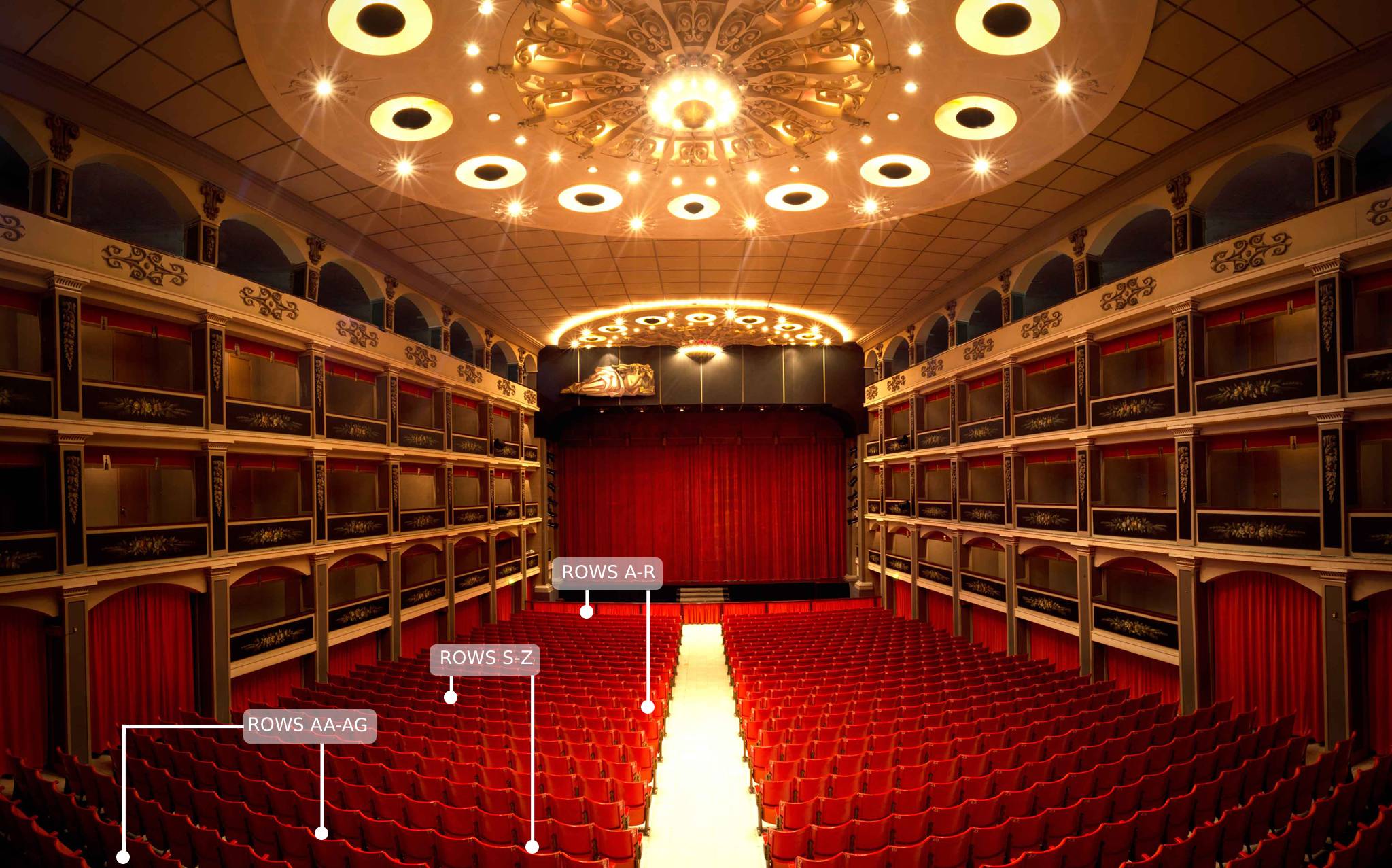
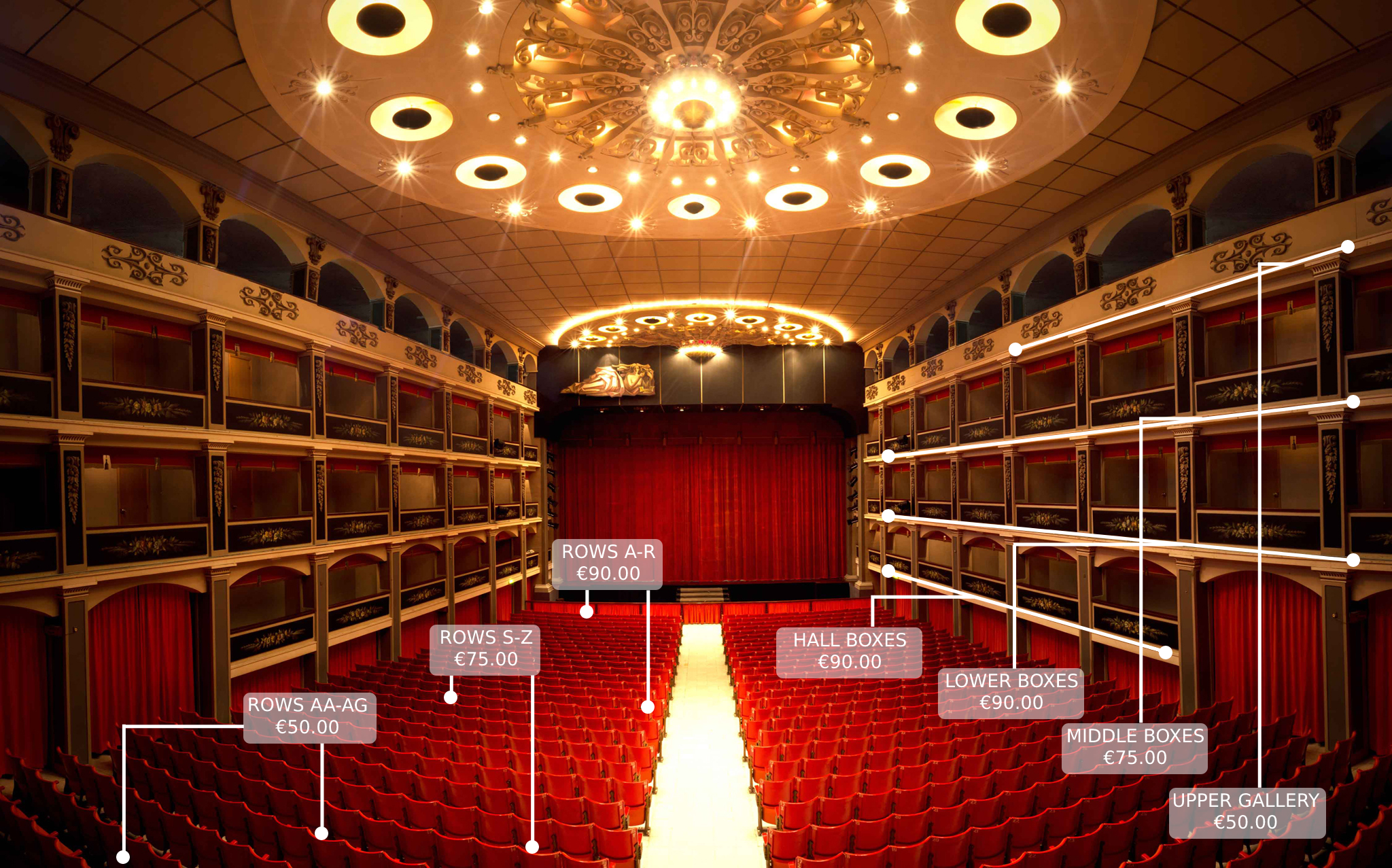
This new production of Verdi’s La Traviata was, for many reasons, a special one for Gozo’s Leone Philharmonic Society (1863), which launched a project resulting in the building of the Aurora Opera House.
Albert G. Storace,
newsbook.com.mt
Sunday 1st November 2026
The production marked the 50th anniversary of the official opening of this opera house on 9 October 1976. It has been a long story of sacrifice, energy, voluntary work, community spirit, commitment and still existing love of music, especially for opera.
This performance was dedicated to the generations past and present who keep alive this legacy. The process is clearly documented and well-researched in an article by Matthew Sultana (head of production) published in the printed opera booklet.
The Leone Philharmonic Society pioneered live opera in Gozo with two performances of Puccini’s Madama Butterfly on 7 and 8 January 1977. The first La Traviata at the Aurora was staged on 28 April 1978. Very ironically, and as I wrote in another article in the printed opera booklet, these two operas were first-night flops, which after revisions by both composers became and still are among the most popular operas. Since 1978, there have been performances of La Traviata in 1998, 2015 and 2023; the latest under review was the 5th.
The House was practically full, and music director Colin Attard, conductor of the Malta Philharmonic Orchestra, leader Marcelline Agius set the ball rolling with the lovely Prelude which is crowned with a most touching, dramatic and sensitive motif which surfaces in Act 2 scene 1 when Violetta implores a bewildered Alfredo to love her as she hurries off back to Paris.
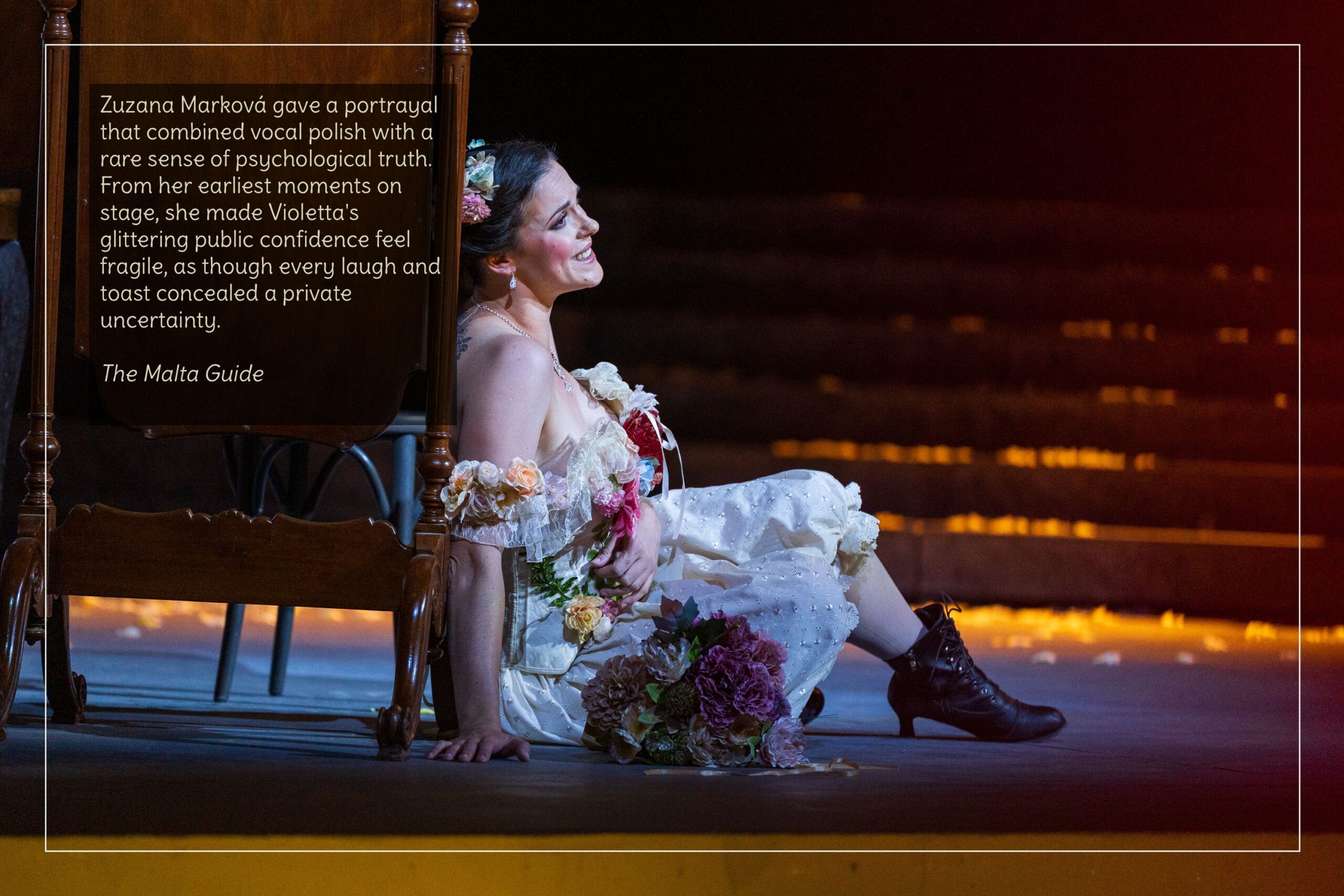
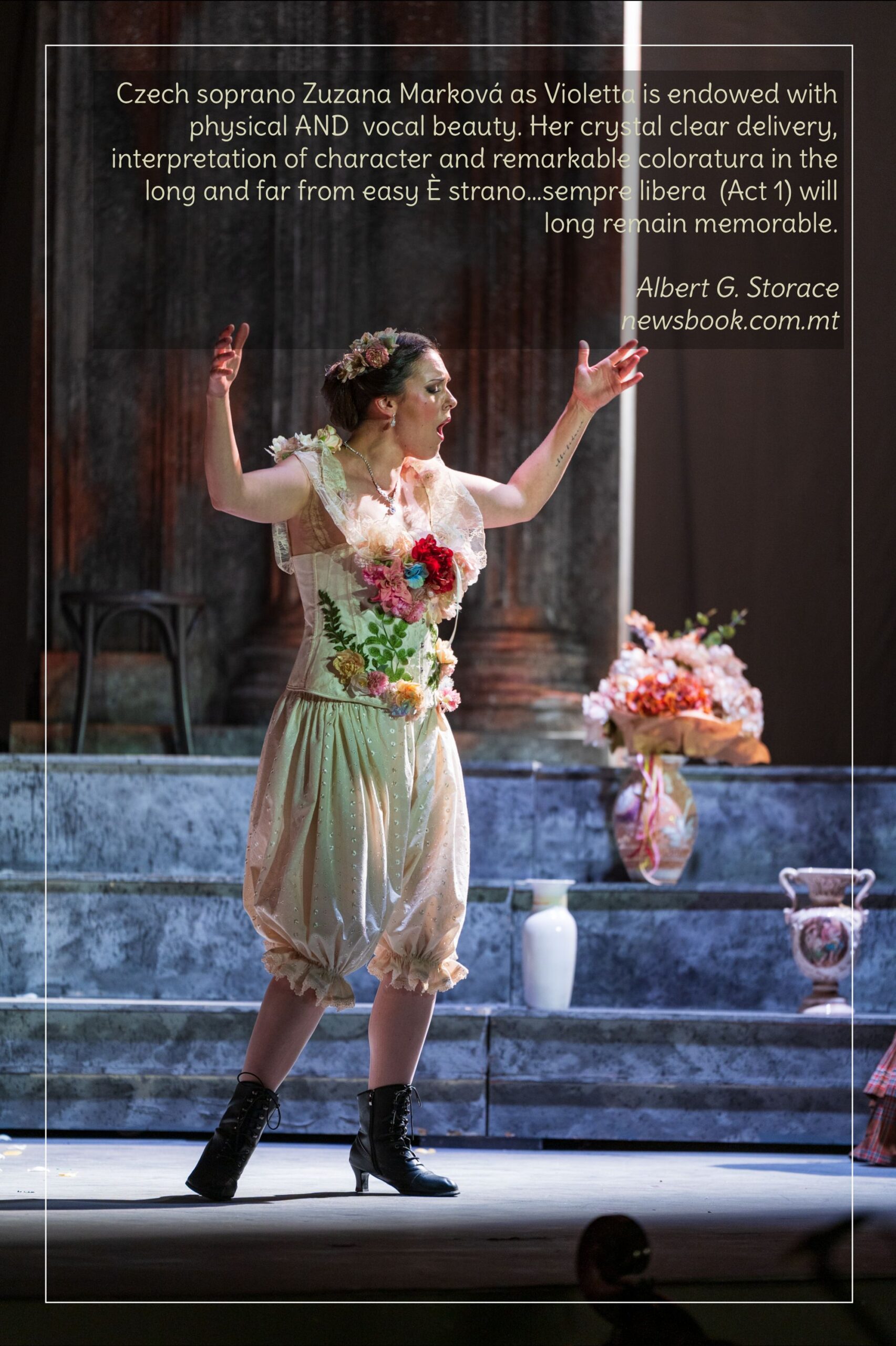
Czech soprano Zuzana Marková as Violetta is endowed with physical AND vocal beauty. Her crystal clear delivery, interpretation of character and remarkable coloratura in the long and far from easy È strano…sempre libera (Act 1) will long remain memorable.
She had already started shining in the Brindisi earlier in Act 1. Her duets with Italian tenor Raffaele Abete in Act 1 (Un dì felice, etereo.. ) and Parigi o cara in Act 3 were very effective.
Another fine display of hers and Greek baritone Dimitris Teliakos as the inflexibly dour Giorgio Germont was in a long duet in Act 2, Scene 1, in which he manages to force Violetta to leave his son Alfredo. All in accordance with the bourgeois hypocrisy of the time. He had two fine solos in Act 2, beautifully projecting his anguish in Pura siccome un angelo and Di Provenza il mar e il suol.
Back to tenor Raffaele Abete, who was an almost last-minute replacement for the role, to which he warmed up very well. His Lungi da lei…dei miei bollenti spiriti in Act 2 scene 1c was full of verve and warm ecstatic ardour. His confrontation with his father during the sane scene was very convincing. So was his anger, jealousy and cruelty in Act 2 scene 2 when he insults Violetta, whose deeply hurt reaction was another heart-rending moment which was to develop into a beautiful concertato. His remorse felt genuine and very relevant to his brief and doomed reunion with Violetta.
In her touching letter-reading, she exclaims that Germont’s words came too late as she feels death getting closer. We all know what is going to happen yet we still feel sad and even shed a few teardrops. That is because a great work like this produced and directed as it was never fails to charm, entertain and convey that special magic.
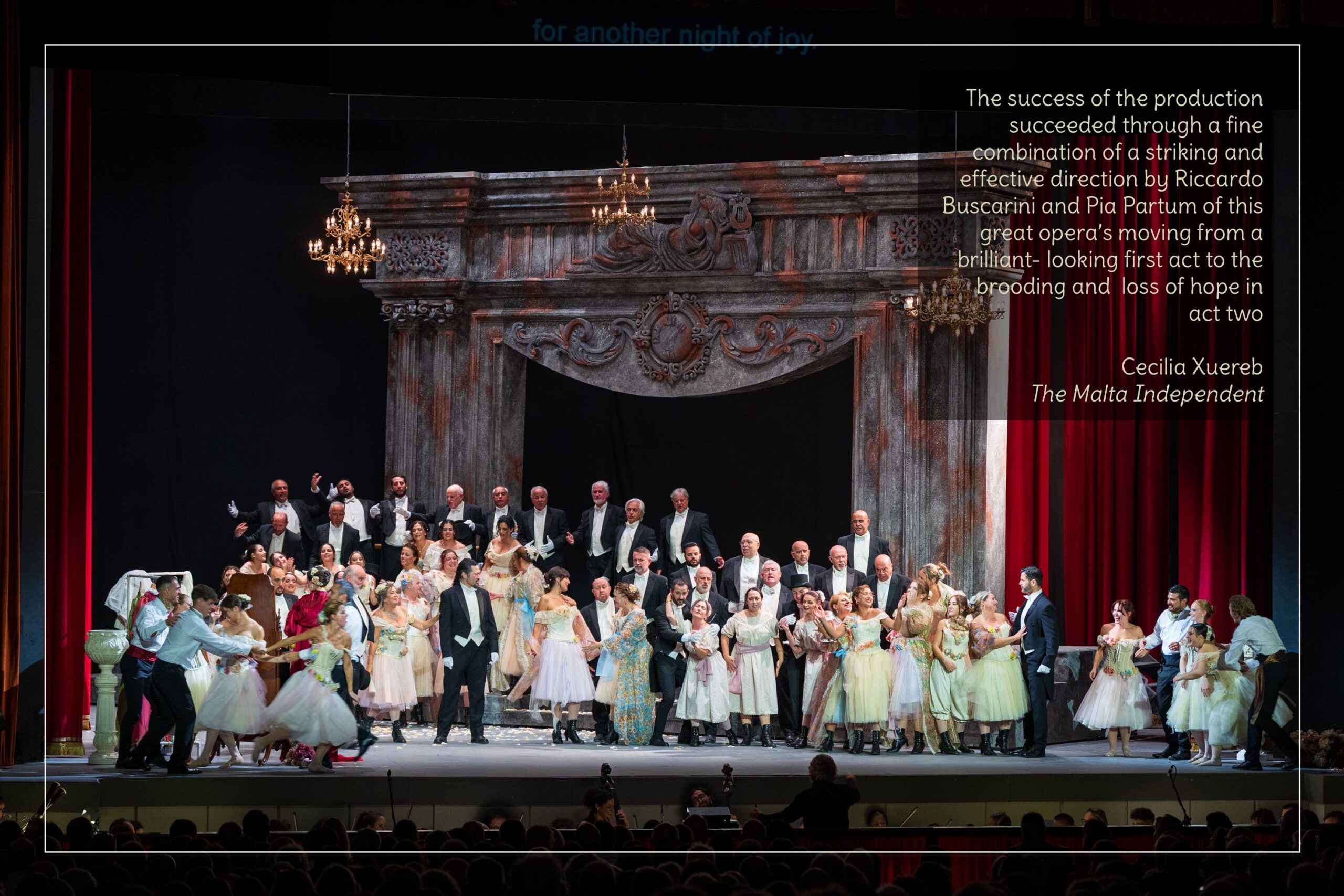
Stage direction and choreography were by Riccardo Buscarini on 4th successive collaboration with the Aurora. Regarding the stage direction he had in turn he collaboration of Pia Partum from Poland by courtesy of the Polish Embassy to Malta. The crowd scenes in Acts 1and, 2 (scene 2), very slick iand well-timed. Lots of movement yet was agile and orderly.
The stage design was by Giammaria Farina and the set construction and mounting Teddy Mizzi’s. Another collaboration with Moritz Zavan Stöckle resulted in the usual splendid light design. Costume design was by Mara Leonora Pieri. Colourful and eye-catching but I found that half the female chorus in underwear a bit incongruous with the flashy gaudiness of the Deuxiême Empire. Violetta is a courtesan but her home is not a brothel as neither is the house of Flora Bervoix, Violetta’s flighty friend very well-interpreted by Bulgarian soprano Andriana Yordanova.
The Aurora Opera Chorus (chorus master Colin Attard) was on the usual very good form as was our reliable MPO. The backstage conductor was Pierre-Louis Attard. A number of Maltese singers handled their secondary roles with credit as was the case with mezzo-soprano Clare Ghigo as Annina, Violetta’s loyal maid. Tenor Alan Sciberras was the Vicomte Gaston de Letorières Alfredo’s friend; baritone Louis Andrew Cassar was Baron Douphol and bass Noël Galea was the Marquis d’Obigny.
Japanese bass Hidenori Inoue was Dr. Grenvil. In minor roles were Gianmario Cucca (Giuseppe) and Darren Vella (valet/ commissioner).
At the very end after the curtain calls, director Colin Attard proposed a symbolic toast to mark the 50th anniversary of the opening of the Aurora Opera house. Inevitably the Brindisi from Act 1 was encored by all the cast.